

A quick note before you start: this is a long post, so I recommend opening it in your browser for a better reading experience!
Morocco, and especially Marrakech, is beloved by fashion circles, and there is a big reason why. It has 1,000 years of tradition in leather and carpet production, and souks with an endless supply of leather shoes, bags, and accessories. Then there is the inspiration of Yves Saint Laurent, who spent many summers there and drew creative inspiration from Marrakech, leaving behind the legacy of the stunning Jardin Majorelle. The vibrant, richly colorful vibe of the city, along with the warm and friendly people, adds up to an unforgettable experience.
We spent our holidays in Morocco, visiting Essaouira and Marrakech, and I must say I am in love. This country has so much to offer. We surfed, went to the mountains, explored old medinas and stunning parks, visited museums, negotiated in souks, and enjoyed amazing cuisine, hammams, and Moroccan mint tea (I am a fan!). I am still smiling when I remember it.
What We Saw
Essaouira


Our itinerary started in Essaouira, a town on the Atlantic coast with a beautiful historic medina. There is a fish market in the town where you can buy fish and have it prepared and eaten immediately. Overall, Essaouira has a very relaxed vibe, where history mixes with the ocean. It is also called the Windy City, and since it has very strong winds, even in late March it was quite chilly despite the full-on sunshine.
We also stayed in a very nice villa, as we were a group of 10, and I highly recommend it. It had a very unique and beautiful aesthetic. It is a 10-minute drive from Essaouira, so you do need a car.

Sidi Kaouki and Imsouane
As it was very windy in Essaouira, we decided to drive to Imsouane, which is a 1.5-hour drive south. It is a small town that is essentially a surfer’s paradise. It has this laid-back vibe and a sandy beach, but the surfing itself is quite advanced. We asked for a lesson, and the coach talked us out of trying to surf there because we were too beginner for the high tide. It was still a nice place to chill, swim, and play in the sand with our little ones.
The next day we needed to move from our villa, so we went for a one-hour surfing lesson in Sidi Kaouki. If you are into surfing but are just a beginner, this is the best place to go. The beach is sandy and wide, with long waves that are perfect for beginners. Sidi Kaouki is mostly about the beach and surfing. There are a few chill coffee shops and restaurants, as well as camels and buggy rides, but the town itself is quite small. The surfing was amazing, though, even if my arms were aching for two days after.

Sidi Kaouki vibe
Marrakech
Marrakech can be quite overwhelming. Driving in Marrakech is its own extreme sport, with all kinds of traffic participants pushing their way through. It is common to see a mule in the street on the outskirts of Marrakech, and gazillions of motorcycles and mopeds ignoring traffic lights and squeezing through whenever they can. I had heard stories of random passengers jumping into the back of pickup trucks to get a lift and thought that would not happen to us because we had a closed car. Just then, I looked and saw a couple of roller skaters attached to our car for a faster ride.
When we went into the medina for the first time, it was a game of making sure that none of us, including two 5-year-olds, got hit by a moped driving through the narrow streets and souks. The walking looks a bit like this:
We then met a super “helpful” local who told us that Bahia Palace was closed for renovation and that he could walk us to a very good place instead. While people here are very warm and friendly in general, there was something about his demeanor that looked suspiciously, excessively pleasant. A few minutes later, we saw him and his friends running from undercover police. Bahia Palace was not closed, and apparently false guides are a thing in Marrakech, to which the city’s answer is police in civilian clothes to make sure the tourist experience stays good.
After this intense experience, we took a rest in a coffee shop with Moroccan mint tea, got acclimatized, and were ready to explore more. The medina is a massive labyrinth with fascinating souks and passages everywhere, culminating in Jemaa el-Fnaa square.
In the evening, this square transforms into a sea of restaurants and rooftop bars. The experience is frankly hard to describe. There are tables everywhere, and as you walk along, the owners stop you to present the amazing dishes they have. We had already had dinner, but it is probably impossible to leave that square hungry.
The next day we went to the YSL Museum and Jardin Majorelle. Yves Saint Laurent and his partner Pierre Bergé spent quite a lot of time in Marrakech and purchased the abandoned Jardin Majorelle, which they restored and rebuilt. Yves Saint Laurent’s ashes were actually scattered in Jardin Majorelle, and there is an amazing museum dedicated to his work. The garden itself is stunning. I came back so inspired by Jardin Majorelle that I am working in my garden every day to make it look better, although it bears no resemblance to Jardin Majorelle.
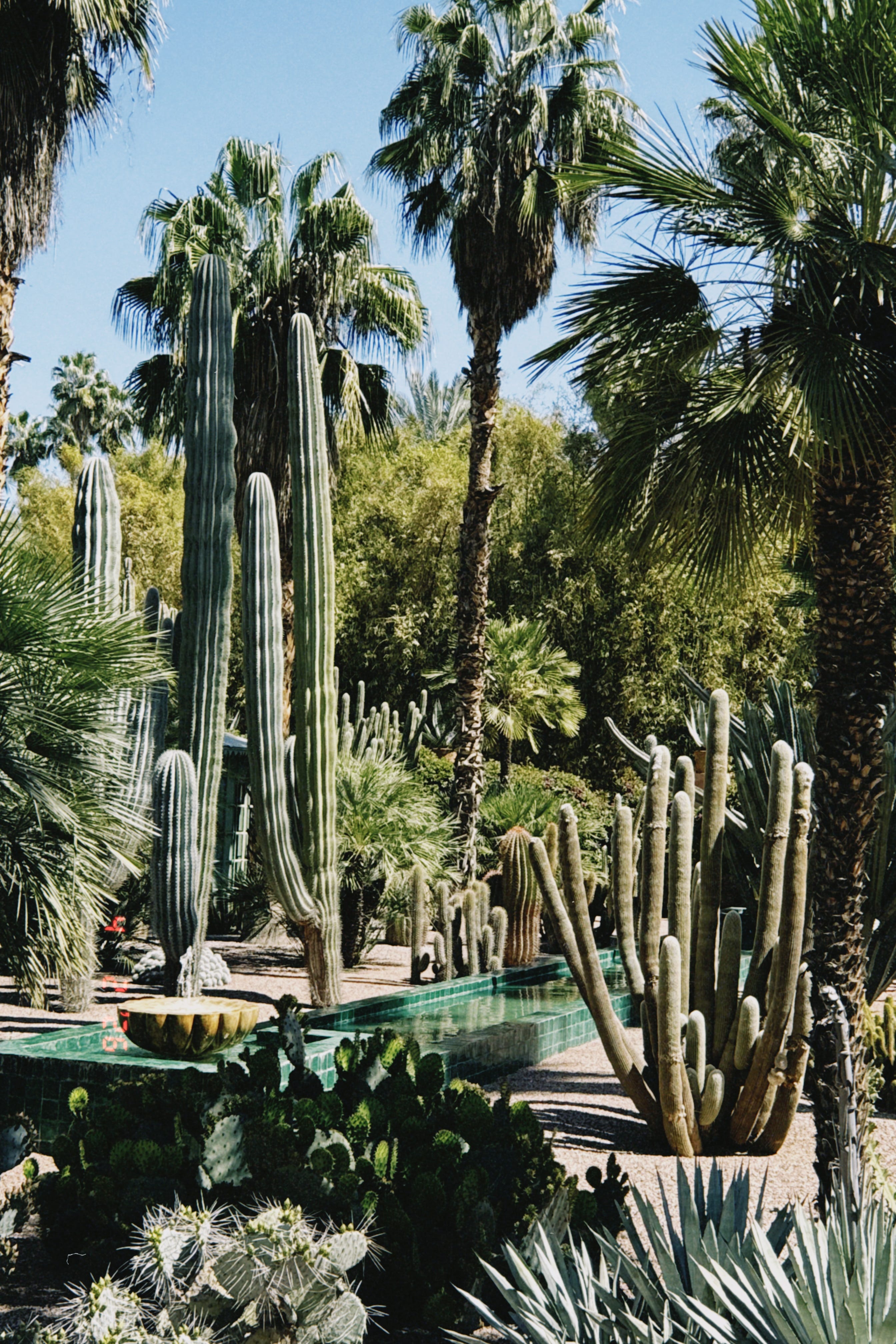
Jardin Majorelle’s aesthetic reminds of fashion a little bit. There are a number of statement plants that are given space to showcase their beauty, and they are very sculptural. It reminds me of fashion, when you tone down the rest of the outfit to let the statement piece speak.
Anyway, the place is stunning, and we loved exploring it. The only thing I would suggest avoiding is Café Majorelle. There are many better options around, like Moro restaurant.
While walking around Marrakech, I highly recommend booking a hammam. They are much less expensive than in Europe and really good. We went to the one closest to Jardin Majorelle, which was okay, but I would not say it was exceptional. There is, however, a huge list of hammams that are just stunning in Marrakech.
In terms of food, there are several main dishes to try. Tajine is the triangular pot that can slow-cook anything next to the fire, though it is often used for chicken with olives or similar dishes. Tangia is Marrakech’s old-boy dish, where beef or similar meat is slow-cooked. Couscous is traditional food, but it is usually served on Fridays, and some places will not even have couscous on other days. And then there is my favorite: Moroccan mint tea, which is a combination of green tea, mint, and a lot of sugar, and which I tried to recreate at home, though it was not quite as simple.
Around Marrakech
A drive of just about 90 minutes from Marrakech will take you to the mountains, where you can see snow-capped peaks. We drove to Imlil, saw the waterfalls, and passed by Kasbah du Toubkal, a hotel with an interesting story: its founders established a foundation that contributed significantly to infrastructure development in the surrounding villages.
We also visited Kasbah Tamadot by Richard Branson for lunch, which is a very beautiful luxury resort with breathtaking mountain views and a beautiful restaurant.
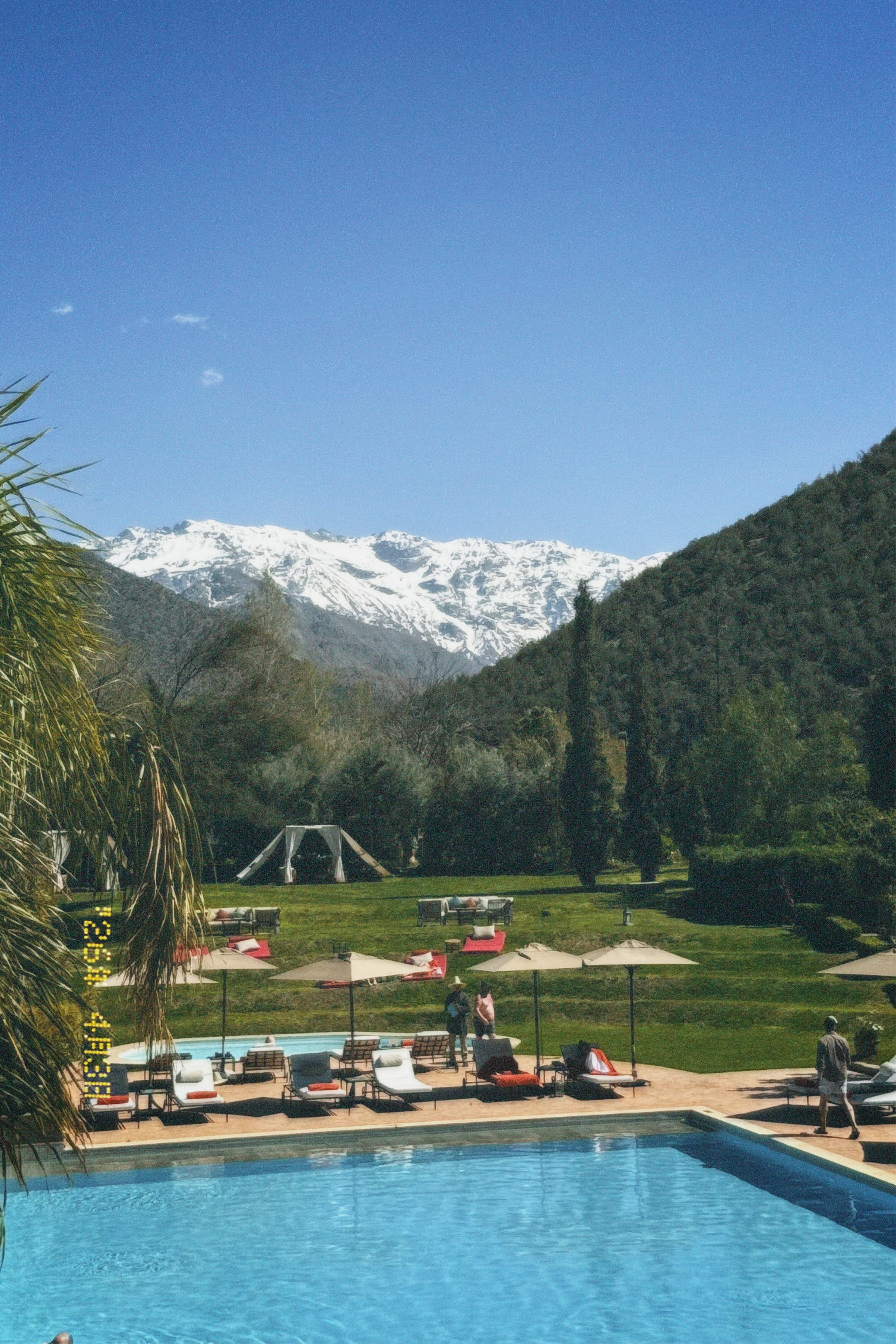
Kasbah Tamadot
If you see trips to the desert from Marrakech that take just two hours, you are probably going to Agafay, which is not a real desert. The Sahara is an eight-hour drive from Marrakech. As you can see below, the “desert” is green. We stopped at one of the places for a camel ride. It looks like the image below and could be a good option if there is no swimming pool in your area. The real Sahara trip takes about eight hours from Marrakech, so keep that in mind if you want to see the real desert.
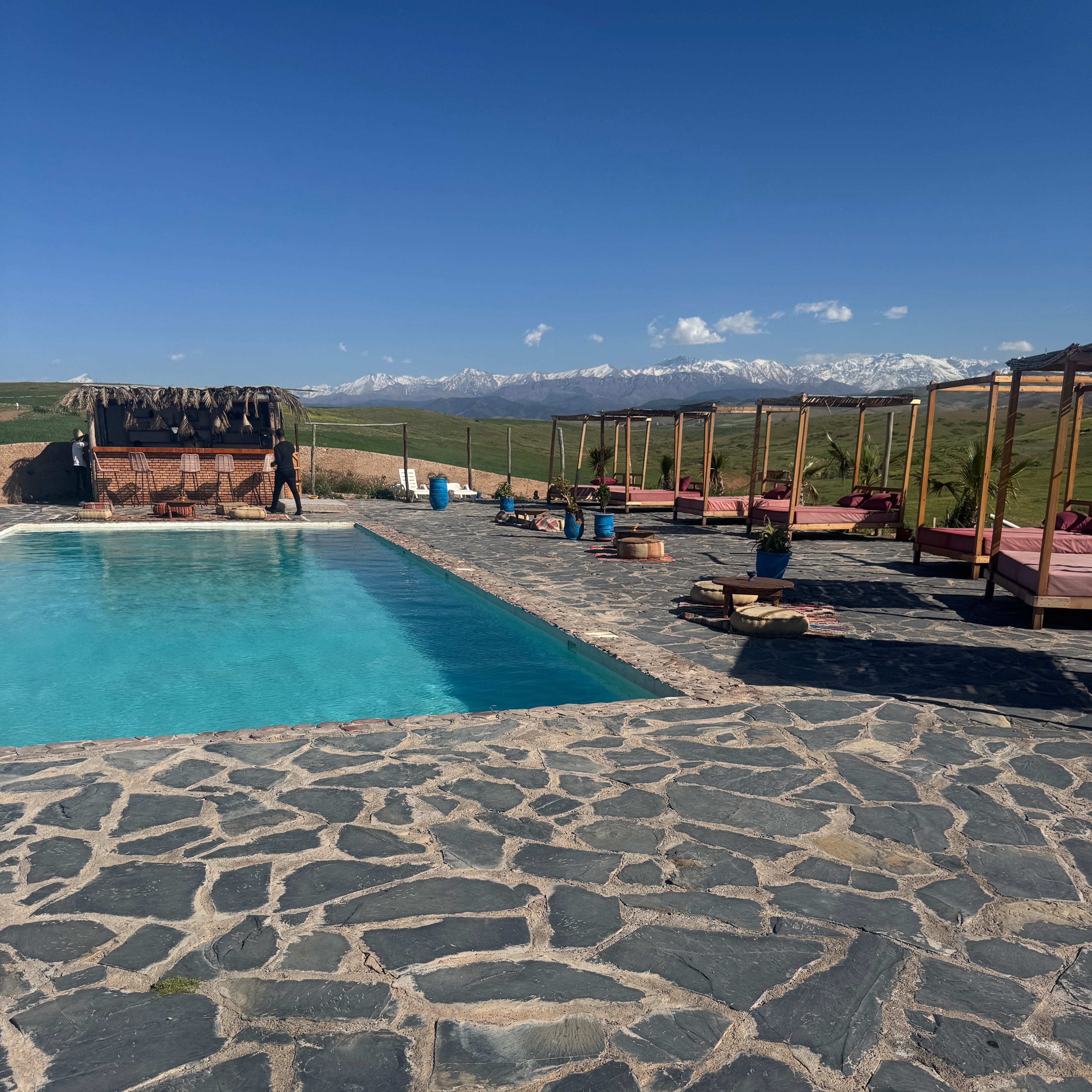
Agafay “desert” experience
What I Wore
I packed at around 10 p.m. on a Friday night for a 6 a.m. departure, so I did not have time to try things out, which meant quite a bit of overpacking and not wearing everything I packed. Here is a look at my outfits throughout the week.
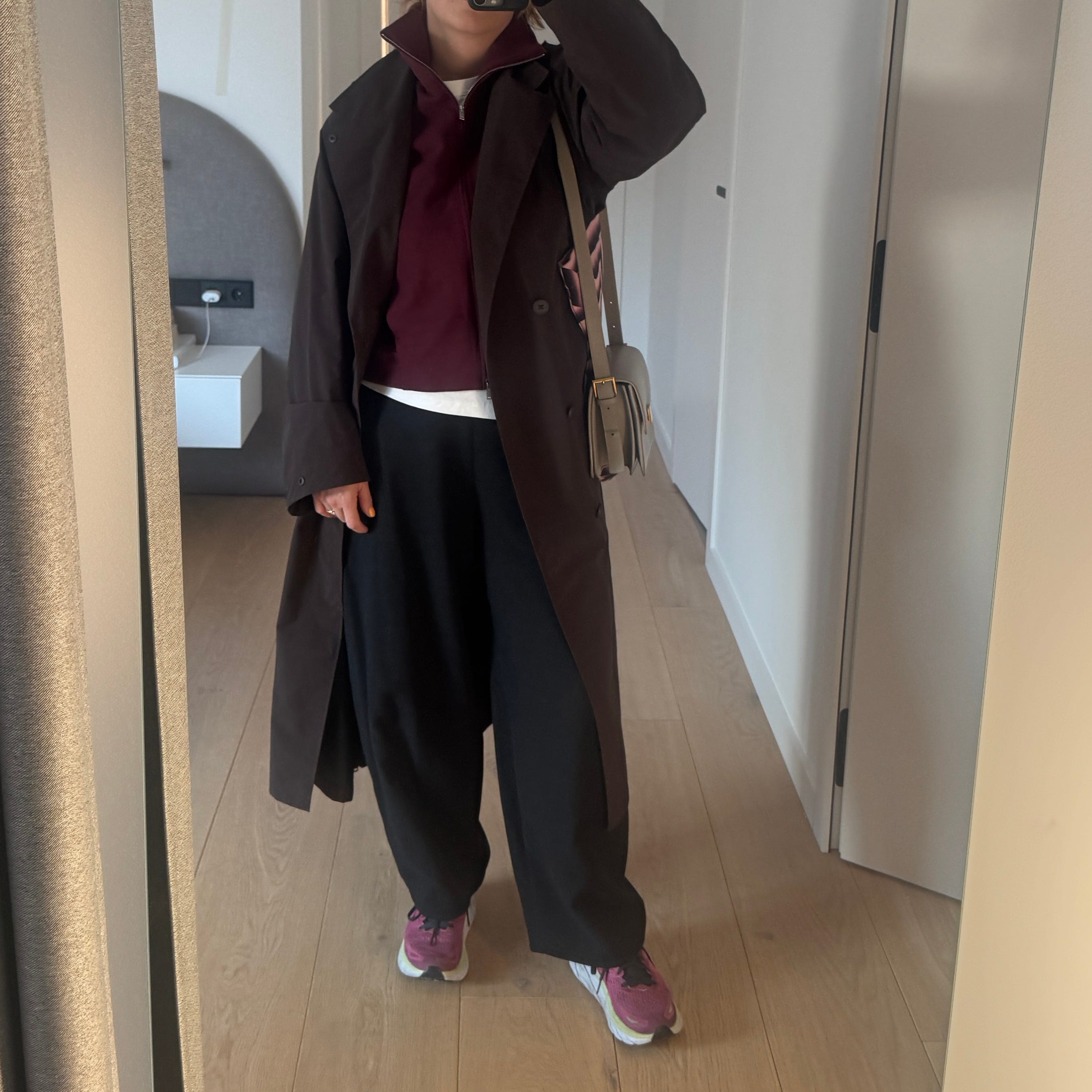
Cos pants, Uniqlo trench, Uniqlo T-shirt, Cos track jacket, The Curated bag
My airport outfit was simple and convenient and made sure I did not need to pack my sneakers into the bag, which is great.


Left: Cos pants, Uniqlo windbreaker, Cos track jacket, Varnelis bag. Right: Basic Apparel skirt, L.A. Apparel jellies, The Curated bag, Tibi sweater.
Essaouira was quite windy and we really needed long sleeves, which I had underpacked. I had to make do with what I had, and I must say the Uniqlo windbreaker really works.


Both: Tibi jersey skirt, Le Monde Beryl shoes, Varnelis bag, Left: Cos silk blazer, The Curated top. Right: Uniqlo satin top.
I loved wearing the Tibi jersey skirt in Marrakech. It felt very much in line with the vibe: relaxed, fluid, and drapey. I wore it multiple times as we were exploring.

Cos pants, Hoka sneakers, Massimo Dutti shirt, The Curated bag.
This is my mountains outfit. I needed convenient sneakers, but still wanted a decent, polished look.
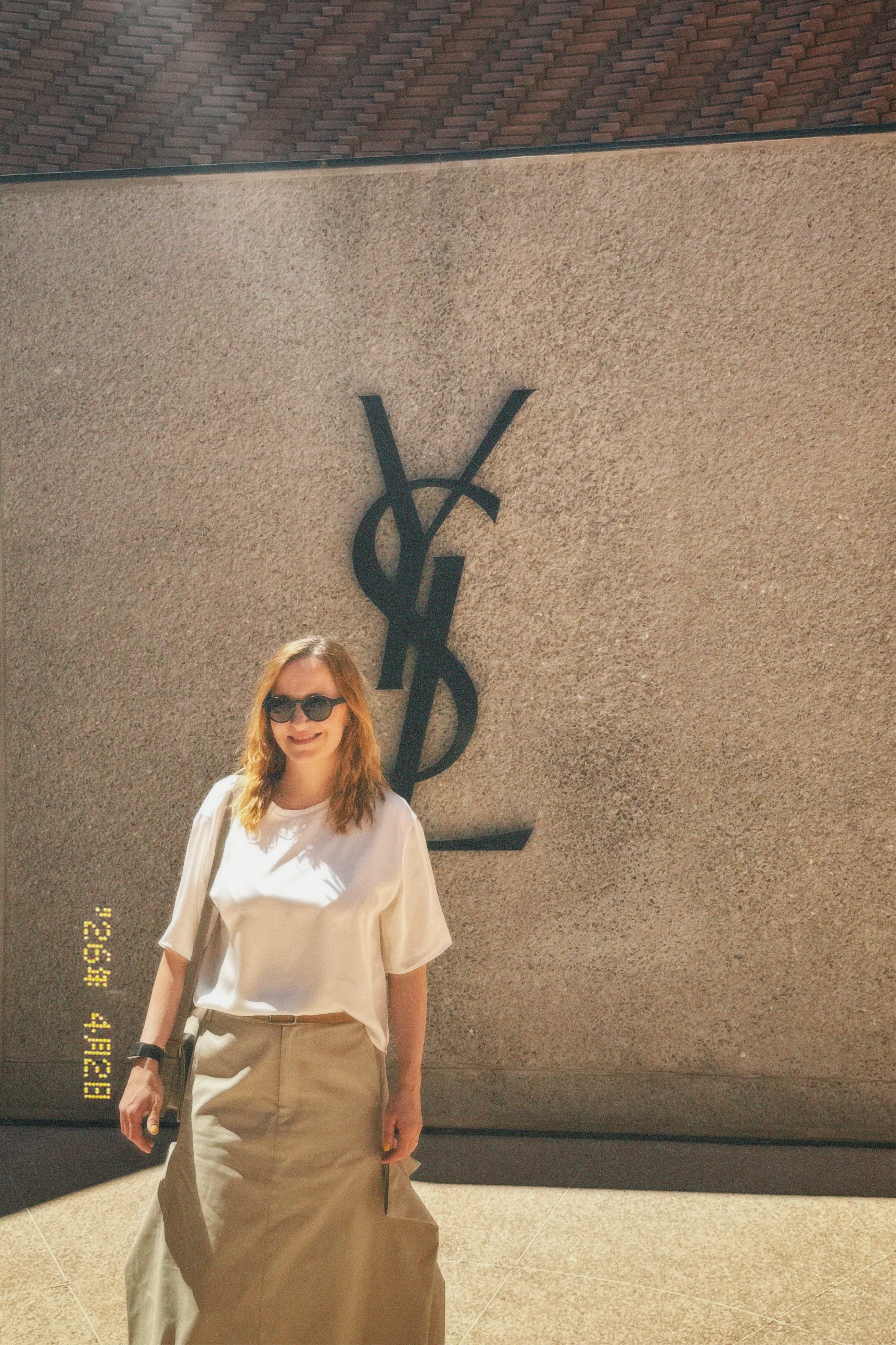
Tibi skirt, Uniqlo satin top, The Curated bag
For the YSL Museum, I decided to pull the most fashion-forward piece from my closet, which is the Tibi Luxe Twill Skirt. In general, it was a bit too sculptural for the occasion. Somehow, Marrakech feels more like drape and rounded forms to me. Nevertheless, I definitely enjoyed wearing it.
The top performers from the trip:
Le Monde Beryl shoes were amazing, and I wore them almost everywhere. Many thousands of steps were walked in them. They are closed-toe and do not get dirty quickly, which is an additional benefit.
The Cos scuba track jacket and Tibi cashmere V-neck saved my day many times, as they were the only two long-sleeve options I took with me, which was probably a bit optimistic, as it gets quite chilly in late March, especially in the evenings.
The Tibi jersey skirt was my true fundamental on this trip. It matches the vibe of Marrakech quite well and is relaxed, comfortable, but also refined. It can also be transformed into shorts by tying the skirt between your legs.
The Uniqlo windbreaker, to my surprise, protects from wind. It was much warmer in Essaouira when I was wearing it.
Uniqlo satin tops: one of the challenges of my dressing is relying excessively on T-shirts, but these satin tops are inexpensive, refined, and comfortable enough at a T-shirt-level price. I loved wearing them.
Uniqlo T-shirts for layering: having said that, T-shirts were still essential for layering, and my go-to is now the simple Uniqlo crewneck. I have yet to try the Leset Margo, which the fashion Substack crowd is obsessed with.
Massimo Dutti shirt: I only wore it once, but it made me very happy. Massimo Dutti is a great place for interesting tops at reasonable prices.
Jellies or sand/sea shoes are a must whenever going by the sea. There are several options that I like. For example, I wore these L.A. Apparel transparent jellies to death last year. These are also good, or simple Havaianas are great too.
Meanwhile, these are the pieces I packed and did not wear:
Dresses that were too short: I had two and planned to wear them around the villa, but I ended up wearing other clothes or swimsuits when we were back from the trips.
Too many skirts: for example, I bought an Uniqlo satin skirt specifically for this trip but used other skirts instead.
Too-open tops: it was not as hot as I expected, and I did not want to wear anything without at least short sleeves.
Structured pieces: I wore my new Tibi skirt for the YSL Museum as a homage to fashion, but I felt that organic, drapey, free-flowing pieces were more in line with the Marrakech vibe.
What I Bought
Fashion shopping in Morocco is its own kind of sport. The souks are abundant wherever you go, mostly selling carpets, leather bags, shoes, jewelry, ceramics, interior decorations, and a number of other things. The key aspect is bargaining, pretending not to want the piece, and almost walking away to get a good price. It is quite an art, and similarly to assembling your own Ikea piece, after this negotiation you feel like you did it yourself and love it even more.
That said, I ventured out to shop with a big fear of being scammed. I felt like a tourist for whom the prices would be inflated and that I would imagine I got a good deal while actually being scammed. None of that happened, though, as far as I can tell.
At first, I passed a bunch of stands with fake designer bags and such. I have never seen so many fake Hermès slides. If I saw a Louis Vuitton piece, I would immediately disqualify the stand and pass it by. Some time later, I got to an area that seemed a bit more authentic.
I was looking for a leather bag that would fit my laptop, and there were plenty of options. I went into a small street with a number of vendors and started talking with one, who probably brought me bags from the whole street to see and try.
My eyes landed on this oversized tote, and as they did not have a full-length mirror, I asked them to film me trying various pieces. I was still not convinced, as I thought maybe the tote was too big, so we negotiated, and I was really undecided, which really helped the negotiation.
Apparently, the way to distinguish whether the leather is real is to smell it, so I smelled it, and indeed it was earthy and leathery. Spoiler alert: it still smells a few weeks later. He was also showing some kind of lighter trick, which I am not sure is really a legitimate way of testing or just showmanship, and I kept trying and trying and trying the bags while also trying to decide.
The initial price of this bag was 1,500 MAD (150 USD). Finally, I said I liked a smaller bag but preferred this bag’s color, and he said he could just paint the smaller one for me, no problem. We agreed on the price of 900 MAD (90 USD), and that I would be free to choose either this bag or the painted bag. He also agreed to let me watch the painting process.
Ultimately, I liked the initial tote better, as it had more gloss, and decided to embrace the oversize and make the deal. I brought it back with me, and I absolutely love it. It feels authentic and has this worn leather look.
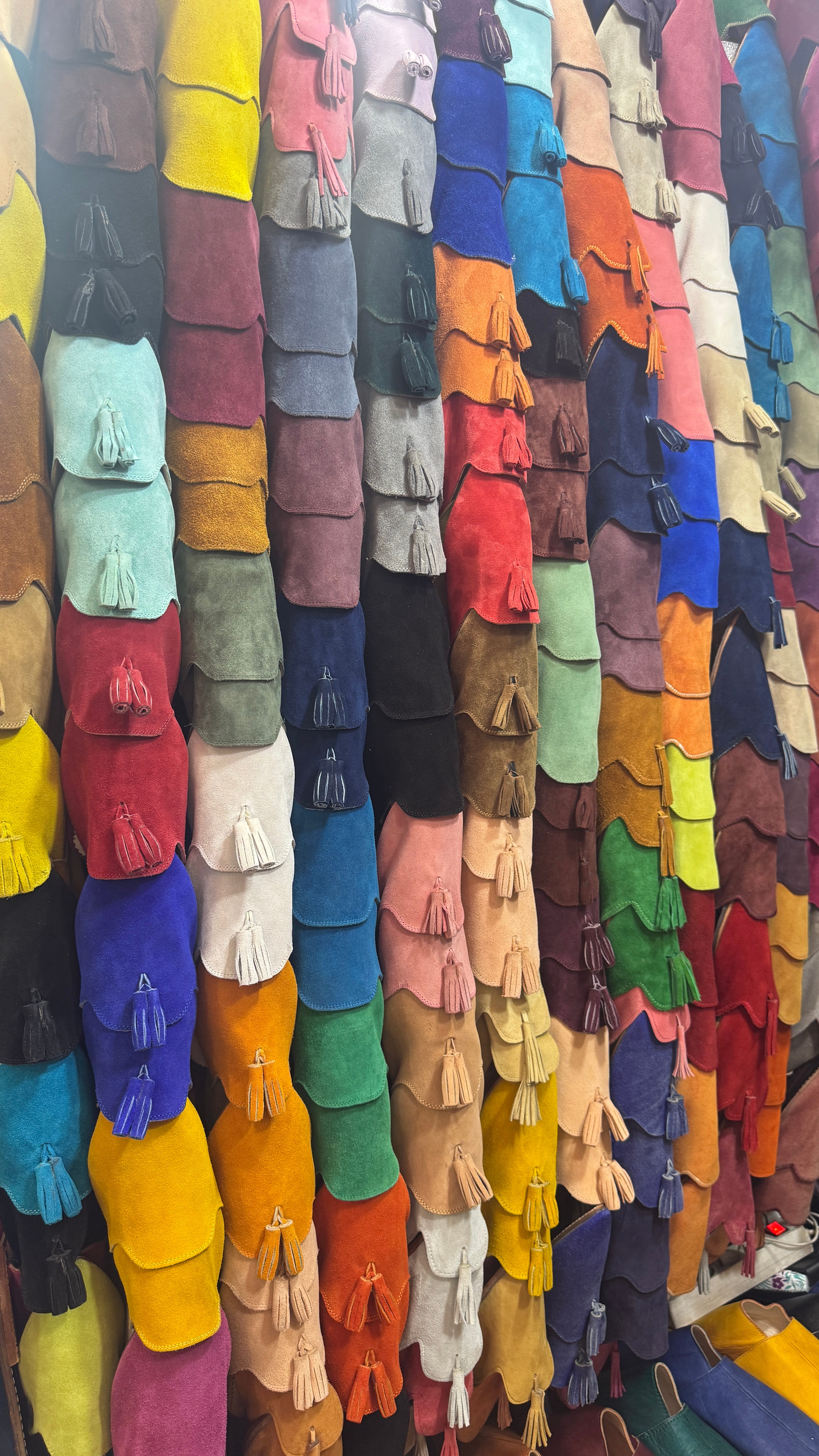
The best negotiation I had, though, was for a cobalt suede shoe that I did not want, which I kept trying on and trying on, but in all honesty, summery suede in Lithuania has very few use cases, as it often rains. I think the price started at something like 400 MAD (40 USD), and I told him that the shoes were beautiful but I had nowhere to wear them, and started walking away. The price then went to 15 USD and then 10 USD as I was leaving. I still did not get them, as indeed I have nowhere to wear them.
In general, I loved shopping and negotiating in the souks, but I highly recommend looking for more obscure areas. The farther away from the main square you are, the better the prices and the more authentic the pieces, which I loved. There could have been much more shopping done. There were plenty of great belts, fringe bags, shoes, jewelry, and ceramics, but I did not have the time, so this bag and a bracelet I bought later were my only purchases.
So this is the recap of our trip. I will leave you with a few more pictures for the beauty of Morocco. It is definitely a stunning and very colorful country for those who get inspired by aesthetics, and I truly hope I will have a chance to go back.


This article includes affiliate links. If you buy something through my links, I may earn a small commission at no additional cost to you. Some of the affiliate revenue from this post will go to my 12-year-old stepson, who provided some photos for this post in exchange for a percentage of the affiliate revenue and a bottle of Lipton iced tea :)
This made me want to go back! Marrakesh is such an amazing place. Haven't been to Essaoira, but maybe next time.
I'm in awe that you drove in Marrakesh - the traffic is insane!!
High on my list!!! I love all the photos you've shared here and your outfits are perfect 😍